Wind power converter capacitor selection connects electrical duty with a real installation: the DC bus, switching arrangement, housing, cooling environment, and access constraints all matter. SMILER's MKP-LL and custom MKP-L descriptions specifically list wind power inverter applications. They provide a starting point for technical selection, not a qualification claim for a particular turbine or converter platform. Define the operating conditions and interface of the intended capacitor position before comparing candidate configurations.
Identify the converter function and electrical boundary
TDK's renewable-energy overview distinguishes DC-link stabilization from AC filtering in wind and solar conversion equipment. That functional separation is useful when defining a wind converter inquiry. The capacitor on a DC bus and a capacitor in an AC filter should not be assigned the same requirement simply because they belong to the same power system.
Show the relevant part of your converter diagram and mark the proposed component position. Identify whether the request concerns a new assembly or an existing design. State the voltage and waveform at that location, rather than only the generator rating or the complete converter output. If the equipment requirement includes several operating states, identify which ones need consideration. This creates a defined electrical boundary for the component discussion without claiming a universal wind-converter architecture.
Build a shortlist from documented application and construction
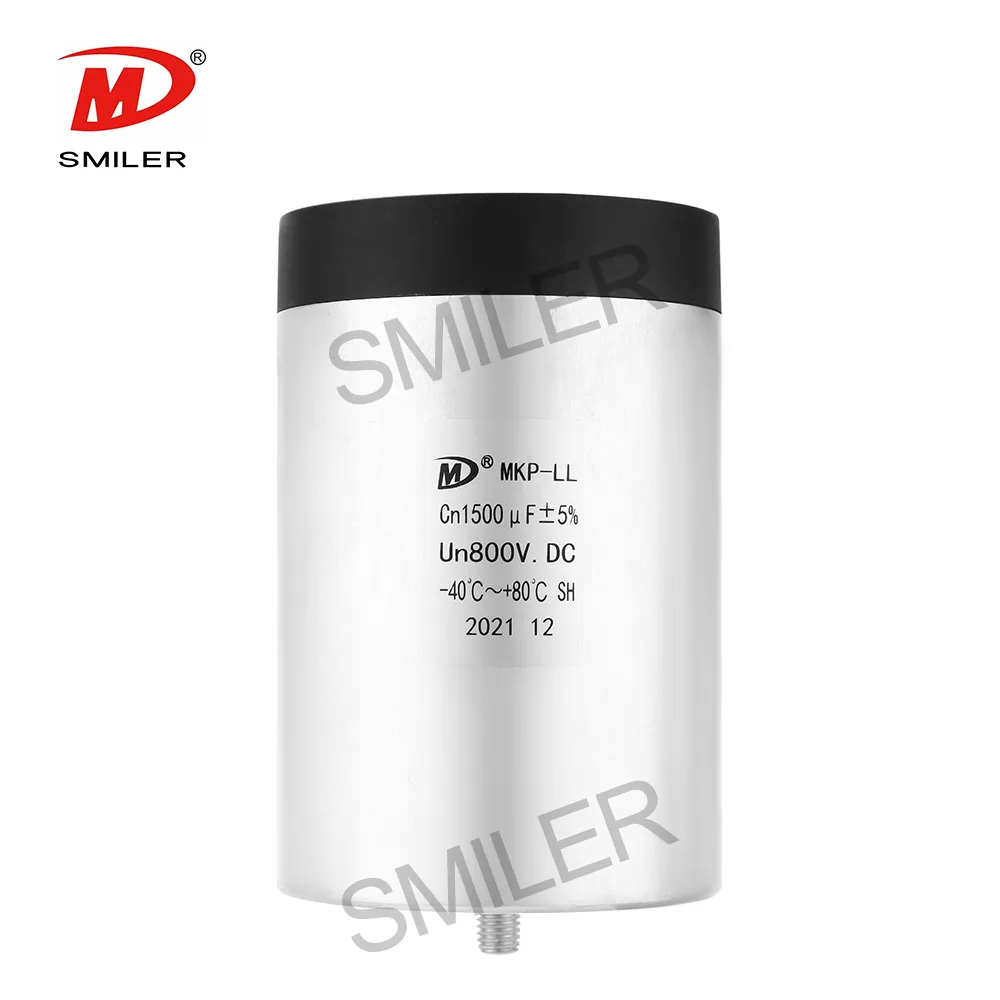
MKP-LL is described for wind and solar inverters, transportation, welders, elevators, and motor drives. Its construction uses metallized polypropylene film, an aluminum shell, a plastic bracket, and resin filling. Male and female terminal options are listed. The published family spans 600 to 4000 VDC and 24 to 5600 microfarads, with the individual configuration still requiring confirmation.
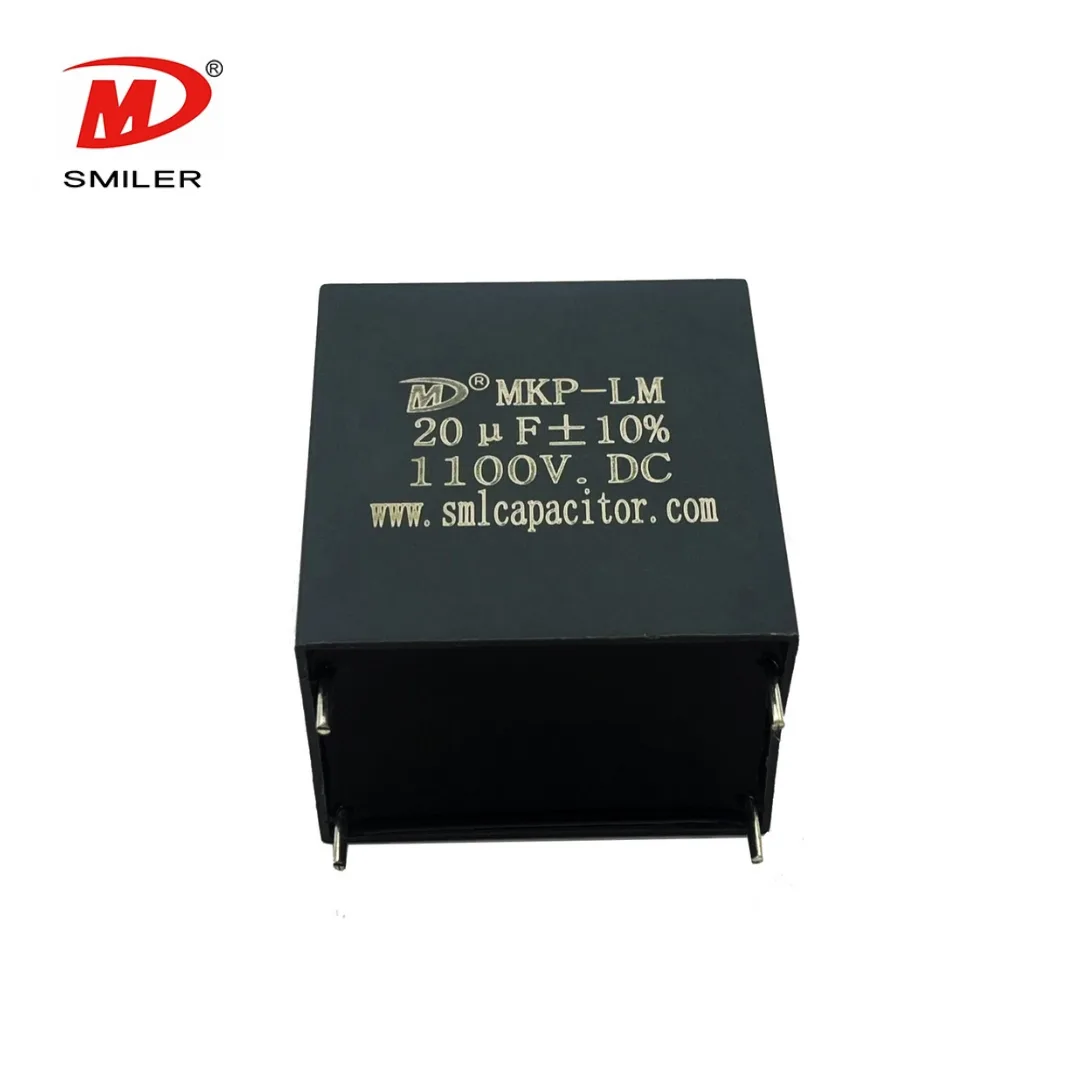
MKP-L is a custom DC-link offering that can be discussed around customer voltage and capacitance. It uses metallized polypropylene film with an aluminum or metal shell and resin filling. There is no fixed numerical family range on its available description. For a wind project with a restricted interface or unusual requirement, compare an identified MKP-LL option with a specific MKP-L proposal rather than assuming customization means unlimited ratings or dimensions.
Separate capacitance demand from current and frequency conditions
TDK's DC-link overview treats ripple capability, temperature, packaging, and environmental protection as separate product-selection dimensions. This supports a structured comparison rather than a choice based on capacitance alone. The external overview is general technical context; it does not supply missing ratings for SMILER models or show that they were tested in a TDK application.
For your converter, state the capacitance target and its tolerance, then describe the current duty and frequency information separately. Identify whether the requested capacitance is per component or for the intended assembly. When comparing electrical data, preserve the measurement conditions associated with resistance and current values. A lower resistance measured under one condition is not automatically a directly comparable result to a value reported under another condition.

Use a duty profile instead of one convenient operating point
A wind converter inquiry should identify the operating states that the equipment designer considers limiting. Provide the normal DC voltage range, relevant excursions, current waveforms, and local temperature information with those states attached. The purpose is to avoid selecting a part around one nominal condition while leaving the actual limiting requirement undefined.
As a selection consideration, ask whether voltage, current, and temperature reach their relevant limits in the same operating state. Do not assume that they do, and do not combine separate maxima into a claimed tested duty without an engineering basis. Clearly labeled conditions make a candidate easier to assess. They also help distinguish an actual change in component requirement from a change in how the project has summarized its operating data.
Respect the housing-dependent temperature boundary
The MKP-LL specification distinguishes diameters up to 116 mm from the 136 mm version. The stated hotspot limit is 85 degrees Celsius for the former and 80 degrees Celsius for the latter. This is a concrete reason to keep housing selection linked to thermal review rather than present one maximum temperature for the entire family.
If two candidate configurations differ in housing size, compare their applicable limits along with their electrical data and available space. Identify whether the project temperature is local air, measured case temperature, or an internal hotspot estimate. Those are not interchangeable labels. The equipment's cooling description should identify the actual capacitor location and surrounding heat sources; an overall cabinet temperature target is not a complete substitute for that local assessment.
Mechanical access can distinguish otherwise similar proposals
Wind converter equipment can impose project-specific mounting and access requirements. For selection, provide the mounting surface, connection positions, available envelope, conductor approach, and tool access that the proposed capacitor must accommodate. These are design inputs to review, not a claim that any SMILER family has a particular vibration, offshore, or environmental qualification.
For MKP-LL, the terminal and mounting instructions concern different interfaces. The documented maximum terminal torque is 5 N m for M6 and 6 N m for M8, while the installation torque entry is 10 N m. Do not transfer the mounting figure to an electrical terminal. Where a custom MKP-L arrangement is being discussed, identify which mechanical interfaces are fixed and which can change, so the electrical proposal remains practical to integrate.
Do not convert lifetime information into a turbine guarantee
MKP-LL gives an expected lifetime of 100000 hours at rated voltage and a hotspot temperature of 70 degrees Celsius. This is conditional catalog information. It does not establish a turbine maintenance interval, a converter warranty, or the same life under every wind-project duty profile. MKP-L's qualitative lifetime description should not inherit that numerical statement.
For a project service-life discussion, identify the intended voltage and thermal conditions and request information applicable to the proposed configuration. Keep equipment targets, component assessment, and commercial warranty terms distinct. If an existing capacitor is being replaced, a matching nominal voltage is not enough to demonstrate equivalent service behavior. The comparison needs the relevant electrical duty and installation conditions, together with the actual reason for considering a replacement.
Focus the inquiry on the converter rather than the whole turbine
Send a circuit extract, capacitor position, voltage profile, capacitance target, tolerance, current or ripple information, and the relevant operating states. Add the mounting drawing and thermal environment. State any project-specific mechanical or environmental qualification requirement explicitly; it should not be inferred merely from the words wind power.
If an existing interface must be retained, show it clearly and identify the allowable changes. If alternative layouts are possible, explain the design objective behind them. Request one identifiable proposed configuration with the information needed for equipment evaluation. Sample availability, production quantities, documentation scope, and commercial timing require confirmation for that proposal. This keeps the sourcing discussion useful without extending a documented wind-inverter application into unsupported turbine-platform approvals or performance promises.
Frequently asked questions
Which SMILER families explicitly list wind inverter use?
MKP-LL and MKP-L list wind power inverter applications. That supports considering them for a technical discussion, but the selected configuration still needs evaluation against the particular converter duty and installation. It does not establish turbine-platform approval.
Is the 85-degree hotspot limit the same for every MKP-LL?
No. The documented distinction is 85 degrees Celsius for diameters up to 116 mm and 80 degrees Celsius for the 136 mm version. Keep the applicable housing condition attached to the temperature value during selection.
Can a custom MKP-L use MKP-LL ratings as its specification?
No. MKP-L is described around customer voltage and capacitance requirements without a fixed numerical family range. Its proposed electrical and mechanical configuration needs its own confirmation rather than borrowing ratings or lifetime figures from MKP-LL.
Does this page establish offshore or vibration qualification?
No. State any mechanical, environmental, or platform-specific requirements in the inquiry and request applicable evidence for the candidate. An application listing for wind inverters does not establish those additional qualifications or a particular field-service record.
Sources & technical reading
- product.tdk.com — power capacitors for renewable energies
- product.tdk.com — index
- www.smlcapacitor.com — DC Link MKP LL
- www.smlcapacitor.com — DC Link MKP L
External references explain general engineering principles. They do not establish SMILER product ratings or approvals.