A DC-link series for power equipment
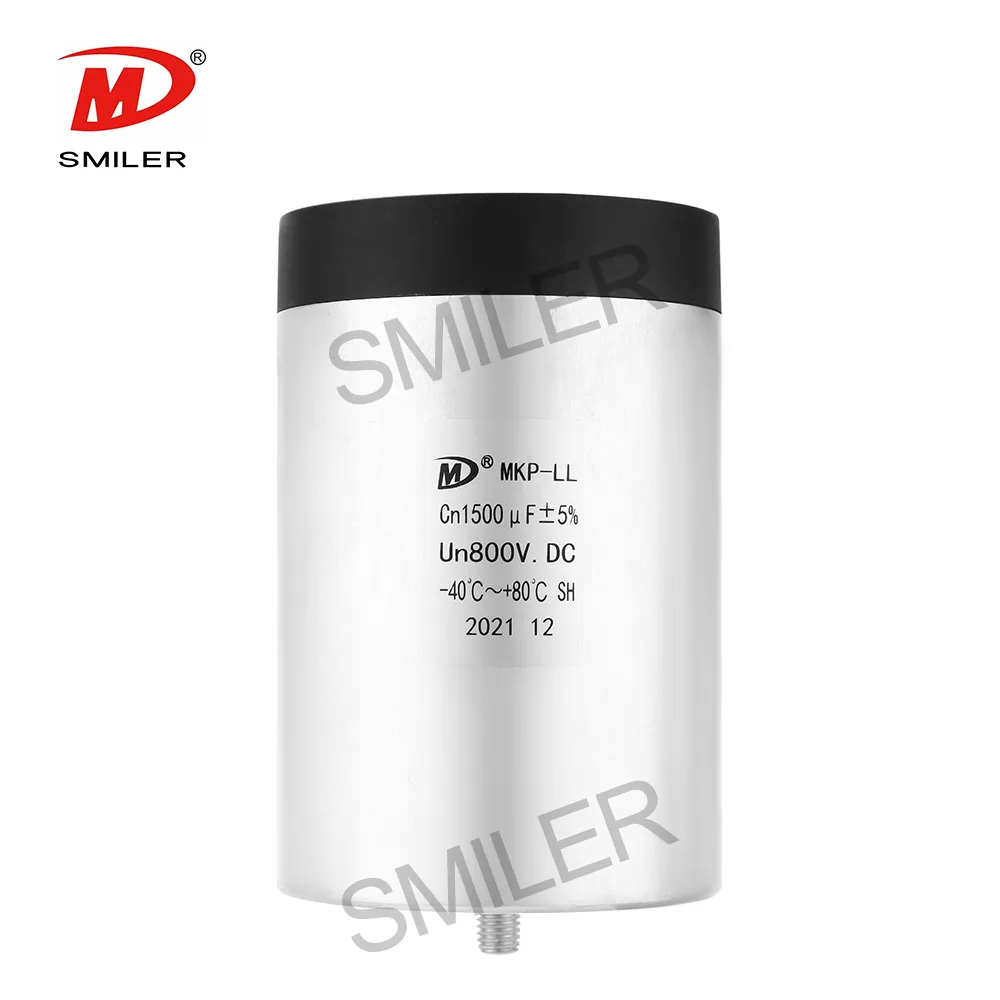
The MKP-LL product documentation identifies wind and solar inverters, electric and hybrid vehicle applications, welders, elevators, and motor drive systems. These uses give the series a clear place in a power electronics sourcing shortlist. They do not qualify a particular part for every inverter or vehicle platform. Your equipment requirements still determine which configuration can proceed to evaluation.
For an inverter inquiry, describe the function of the capacitor in the DC bus and the operating modes that create the highest electrical stress. A drive that changes load frequently may require a different evaluation brief from equipment running at a relatively steady load. State the application in concrete terms, including the installation location and cooling arrangement, rather than sending only the equipment power rating. That context makes the published series information useful without turning it into an unsupported system compatibility claim.
Read the voltage and capacitance ranges together
The catalog gives a broad voltage range of 600 to 4000 VDC and a capacitance range of 24 to 5600 microfarads. These describe the family. They should not be read as a rectangular menu in which the maximum capacitance is automatically available at the maximum voltage. Request the individual part specification for the combination under consideration.
Your electrical brief should distinguish the normal bus voltage from temporary excursions and include the conditions under which those excursions occur. The nominal capacitance target also needs its tolerance and the circuit requirement it is intended to satisfy. If you are comparing several arrangements, identify whether the quoted capacitance refers to one component or the complete assembly. Keeping that distinction explicit prevents a purchasing comparison from mixing a single capacitor with an entire bank, even when the numbers in the quotation appear similar.
Aluminum housing and connection choices
Published construction consists of metallized polypropylene film, an aluminum shell, a plastic bracket, and resin filling. The catalog also describes male and female terminal options. These details help a mechanical team decide what information to request next: a configuration drawing, terminal dimensions, mounting provisions, and the surrounding installation envelope.
Do not select an electrical rating first and assume the connection can be adjusted at assembly. Send the busbar or cable interface with the inquiry, including the space needed for tools and the location of nearby conductive surfaces. Ask which terminal option belongs to the proposed part and which mounting details are included. The reference to UL94 V-0 in the resin description concerns the stated filling material; it should not be used as evidence that the finished capacitor has a separate product certification.

Temperature limits depend on the housing size
The published temperature information distinguishes housing diameters. For diameters up to 116 mm, the stated hotspot limit is 85 degrees Celsius; for the 136 mm diameter version, it is 80 degrees Celsius. This distinction matters when comparing alternatives that appear electrically similar. A single temperature headline would hide a condition relevant to the larger housing.
Provide the expected local air temperature and describe how heat from surrounding equipment reaches the capacitor. Ask the technical team to confirm the applicable temperature limit for the exact drawing and rating. A measured case temperature, ambient temperature, and internal hotspot are different pieces of information, so label the measurement location carefully. If you have only an estimate, keep it identified as an estimate until the assembly has been evaluated. Do not treat a housing limit as permission to operate every part at the same current.
Evaluate ripple performance with the complete duty
The product page describes low equivalent series resistance, low inductance, self-healing behavior, and ripple current handling as series features. Those statements are useful reasons to investigate the family, but they do not provide an order-specific current rating. Current suitability needs to be tied to the proposed capacitor, waveform, frequency, and thermal conditions.
Ask for the electrical data that apply to your candidate part and retain the stated measurement conditions. If a comparison uses resistance figures measured at different frequencies, flag that difference instead of ranking the parts by the number alone. Supply available waveform captures and identify the operating mode in which they were taken. For an existing bus assembly, include how the capacitors are connected and where current is measured. The evaluation should resolve the duty of each proposed component rather than assuming the total bus current is shared in a particular way.
Replacement projects need a circuit review
The MKP-LL description includes use in DC-link circuits that may replace electrolytic capacitors. Treat this as a design opportunity, not a claim of universal interchangeability. A replacement proposal should be reviewed against the original capacitance requirement, voltage behavior, current duty, dimensions, and connection arrangement. A matching voltage printed on two components does not settle the engineering comparison.
The page states an expected lifetime of 100000 hours at rated voltage and a hotspot temperature of 70 degrees Celsius. That is a conditional catalog statement, not a warranty duration or a forecast for every installation. If service life is a purchasing criterion, ask how the proposed operating conditions relate to the applicable lifetime information. Keep this assessment separate from commercial warranty terms, and retain the assumptions used when the design team approves the replacement.
Have a drawing or target specification?
Include it in your first message so the conversation starts with your equipment requirements.
Start a technical inquiryBuild an RFQ around the DC bus and housing
For an MKP-LL quotation, attach the DC bus requirements to the mechanical installation brief. List the normal voltage, relevant excursions, capacitance target, current conditions, and available temperature information. Identify whether those values are measured, simulated, or preliminary. A proposal based on a stable operating point may need another review when the drive or inverter's limiting mode is identified, so make the status of each requirement visible from the beginning.
Show the intended housing location, mounting interface, and busbar or cable connections in a dimensioned sketch. State whether male or female terminals are required and include assembly access constraints. If several capacitors will be used together, explain the planned arrangement and identify the requirement per component. The overall cabinet space alone does not define the usable space at each mounting position.
For the commercial part of the inquiry, separate evaluation quantities from expected production demand. Request current availability, minimum quantity, packaging, destination-specific shipping terms, and timing against the proposed configuration. These are questions for quotation, not fixed promises on this product page. Keep the technical proposal and commercial offer linked by the same part identification so a price comparison retains the selected housing and electrical duty.
Terminal tightening and mounting are different limits
The MKP-LL specification lists a maximum terminal torque of 5 N m for M6 and 6 N m for M8, while the installation torque entry is 10 N m. These refer to different interfaces. A buyer comparing mechanical arrangements should identify which fastener each instruction concerns instead of transferring the mounting value to an electrical terminal. The male or female terminal description also does not identify electrode polarity; it describes a connection option whose geometry belongs in the drawing.
As an installation consideration, allow room for the specified connection method as well as the capacitor body. A layout can have enough volume for the housing while leaving inadequate tool access at the connection. That question is best settled during the mechanical review, alongside conductor routing and the mounting surface.
The catalog states installation in any position, but a usable assembly still needs the clearances and access appropriate to the selected configuration. Orientation freedom should not be confused with permission to ignore the surrounding equipment. Confirm the applicable drawing and installation instructions for the supplied part, especially where the bus interface is already fixed and changing the housing would move the terminals.
Separate temporary overvoltage from the voltage rating
MKP-LL has a rated voltage and a separate schedule of temporary overvoltage conditions. The catalog associates 1.1 times rated voltage with 30 percent of on-load duration, 1.15 times with 30 minutes per day, 1.2 times with 5 minutes per day, and 1.3 times with 1 minute per day. Each multiplier belongs with its duration; the list is not a choice of higher continuous operating ratings.
For design comparison, describe an excursion with both its magnitude and timing. A brief that reports only the highest observed voltage cannot show whether the stated operating pattern matches a temporary condition. Equally, repeated short events should not be described as though they were a single isolated event. These are considerations for interpreting the duty, not an assertion that a proposed circuit meets the capacitor limits.
The rated-voltage selection, temporary excursion assessment, and temperature assessment should lead to one consistent candidate. Moving to a different housing may change the thermal boundary, while changing the electrical rating may alter the available capacitance and dimensions. Review those linked choices together rather than using a temporary-voltage figure to avoid selecting an appropriate normal voltage rating.
Frequently asked questions
Can I order any value inside the published ranges?
The ranges describe the series, not every possible combination. Send the required capacitance, voltage, and installation conditions so the individual configuration and its availability can be confirmed. Use the accepted part drawing and specification for purchasing.
Are male and female terminals both listed?
Yes. The product description lists male and female terminal options. Specify the required interface and request the drawing for the proposed version; the family description alone does not establish terminal dimensions for your order.
Does every MKP-LL version have an 85 degree hotspot limit?
No. The published information distinguishes diameters up to 116 mm from the 136 mm version, whose stated hotspot limit is 80 degrees Celsius. Confirm the limit applicable to the exact housing and electrical configuration.
Is the lifetime statement a warranty?
No. The published expected lifetime is tied to rated voltage and a hotspot temperature of 70 degrees Celsius. Warranty terms and suitability under your operating duty need separate confirmation; neither follows automatically from that catalog figure.
What should an inverter buyer send first?
Send the DC bus voltage profile, required capacitance, current waveform or ripple requirement, local thermal conditions, and a mechanical interface drawing. State sample demand and forecast production demand separately so technical and commercial questions can be reviewed clearly.
Sources & technical reading
External references explain general engineering principles. They do not establish SMILER product ratings or approvals.