Solar and energy storage projects place capacitors in several different circuit roles. A photovoltaic input, a battery conversion stage, a shared DC bus, and an AC output filter should not receive one undifferentiated capacitor specification. SMILER's documented solar-inverter and power-system applications provide a starting point for selecting candidate families. Define the converter position first, then discuss voltage, current duty, environmental conditions, and the mechanical interface for the individual component.
Map the photovoltaic, battery, and grid interfaces
Texas Instruments' TIDA-010938 reference design combines photovoltaic inputs, a battery energy-storage port, and a configurable DC/AC stage. It illustrates why the circuit location matters: a solar and storage assembly can contain multiple conversion functions rather than a single common operating voltage. Its architecture is technical background, not a SMILER customer installation or performance reference.
Use a block diagram of your own equipment to identify the capacitor position. State which operating modes are relevant there, including battery charging or discharge if those functions are present. Separate a panel or battery voltage specification from the voltage across the proposed capacitor. This makes the inquiry easier to evaluate and avoids treating every component in a hybrid inverter as though it experiences the same waveform.
Distinguish DC-link stabilization from AC filtering
TDK's renewable-energy capacitor overview identifies DC-link voltage stabilization and AC filtering as separate functions in wind and photovoltaic conversion equipment. The distinction is useful for organizing a component shortlist. It does not establish a particular circuit implementation or transfer any TDK product characteristic to a SMILER part.
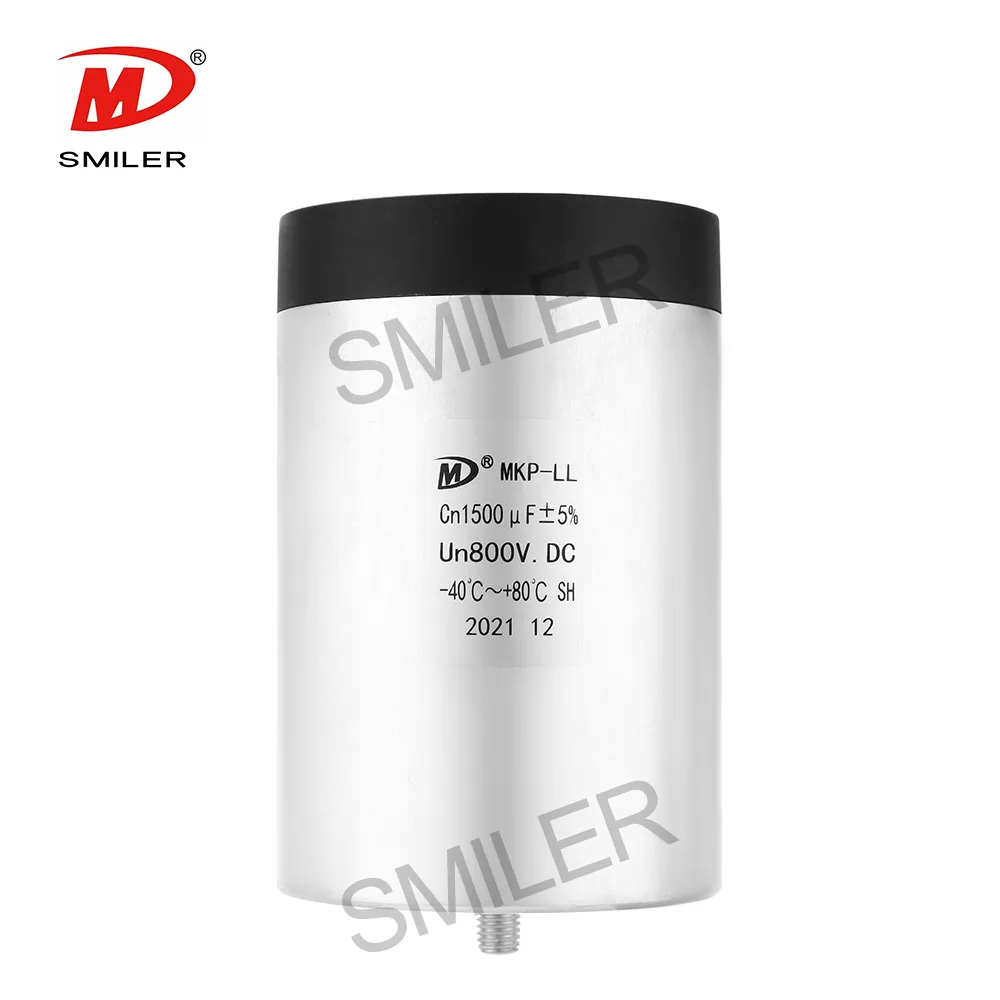
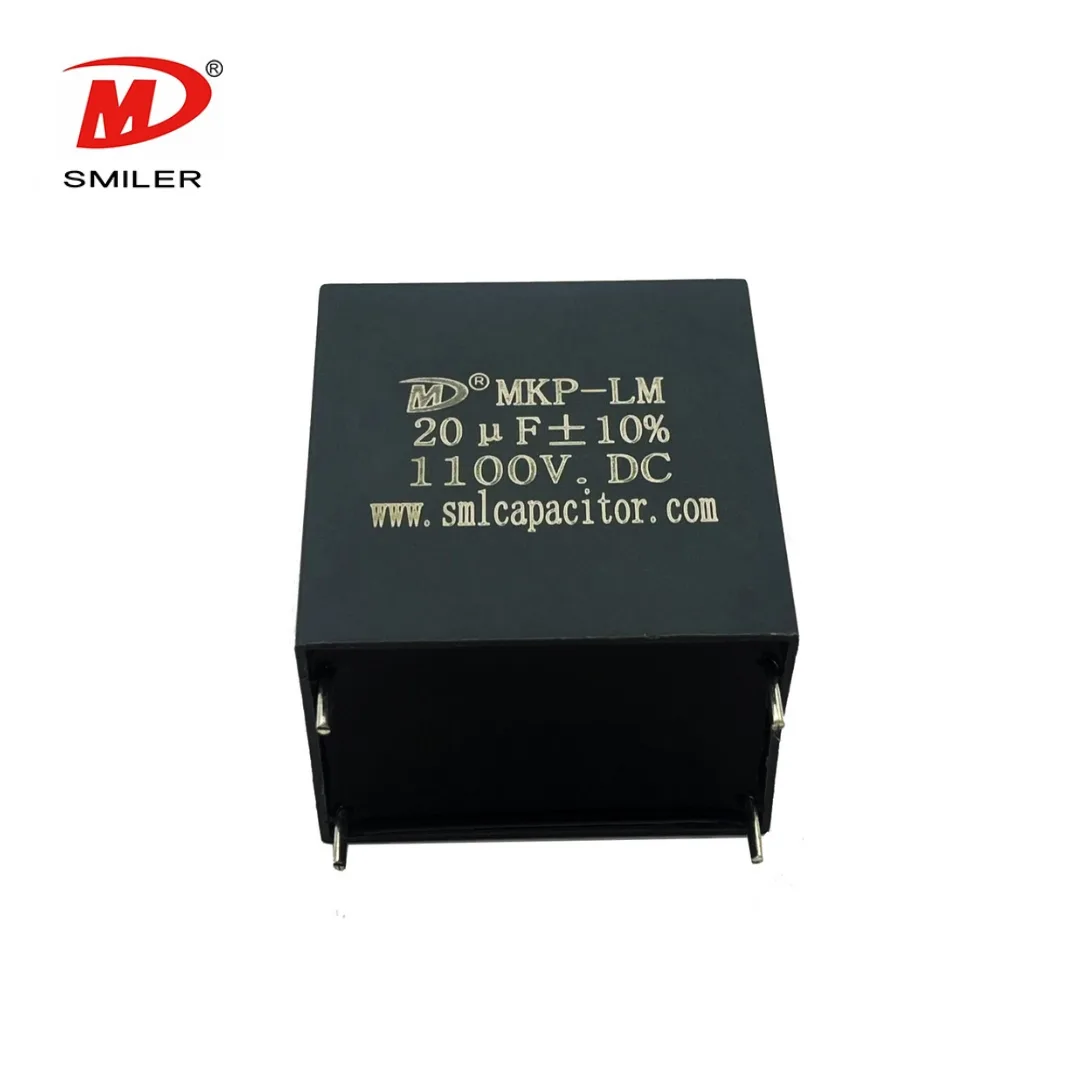
SMILER lists MKP-LL and MKP-L for wind and solar inverter applications, while MKP-LM and MKP-LM THB also list solar inverters. MKP-AL is described for AC filtering, reactive power compensation, power systems, and energy storage equipment. Identify the needed function before comparing families. A DC voltage range is not an AC voltage rating, and a capacitor suitable for discussion at one stage is not automatically a replacement for a capacitor elsewhere in the converter.
Use the bus operating profile rather than one nominal value
A useful DC-link brief distinguishes the normal operating range from temporary excursions and identifies the equipment modes behind them. For a solar and storage project, ask the designer which conditions set the voltage requirement at the particular bus. Do not assume that the highest battery voltage, a panel label, or the grid voltage supplies that answer without reference to the topology.
The capacitance target should have an identified purpose and tolerance. State whether the requested value applies to one capacitor or the complete assembly. If the design allows alternative arrangements, compare them against the same electrical requirement and available space. These are selection considerations; the final combination of voltage, capacitance, current capability, and package requires a configuration-specific proposal rather than an inference from the endpoints of a family range.

Choose between board-mounted and cabinet-mounted candidates
MKP-LM is documented with two-pin or four-pin leads, a plastic housing, and resin filling. MKP-LM THB specifically lists PPS for its case. MKP-LL has an aluminum housing, plastic bracket, resin filling, and male or female terminal options. MKP-L provides a custom discussion around customer voltage and capacitance. The useful comparison is how each proposed configuration meets the intended converter interface.
For a board-mounted assembly, check body height, lead positions, and nearby components. For a cabinet-mounted bus arrangement, consider terminal geometry, mounting support, conductor routing, and access. A compact footprint alone does not establish an easier installation if it moves the connections to an inconvenient location. Conversely, a familiar housing shape does not establish that the part meets a revised electrical duty.
Separate humidity qualification from thermal operation
The MKP-LM THB page gives a biased humidity condition of 1000 hours at 85 degrees Celsius and 85 percent relative humidity with rated voltage applied. That is a defined component test condition. It is useful when reviewing environmental requirements, but it should not be interpreted as waterproofing or as a lifetime guarantee in a solar enclosure.
Describe the environment the capacitor will experience inside the equipment, including whether the specified values are measured or estimated. For thermal review, distinguish local air, case, and hotspot information. A solar installation's outdoor temperature does not by itself define every component temperature inside the converter. The design assessment should address the selected position, nearby heat sources, and intended cooling arrangement rather than apply one environmental number to the entire system.
Preserve the conditions attached to service-life statements
The published MKP-LM and THB operating-life statement is 50000 hours at rated voltage and 85 degrees Celsius. MKP-LL gives 100000 hours at rated voltage and a hotspot temperature of 70 degrees Celsius. Those figures have different conditions and should not be ranked as though they were results from an identical installation.
For project planning, separate a component's conditional catalog information from an equipment service-life target and from commercial warranty terms. Ask how the proposed operating duty relates to the information applicable to the candidate. If the circuit operates in several modes, identify the intended conditions rather than using the most favorable point as a stand-in for the entire duty. This allows the design team to discuss durability without claiming a guaranteed maintenance interval for the inverter.
Treat AC-side compensation as a system question
MKP-AL is documented with an aluminum shell, oil filling, single-phase or three-phase filtering options, and an overpressure disconnector. Its published voltage range is 300 to 690 VAC. A proposed AC-side use needs the actual phase arrangement, frequency, waveform conditions, and intended circuit role; the family description does not define a complete filter or compensation design.
If the project has a required reactive output, state the voltage and connection context attached to that requirement. Ask how the candidate's values relate to the selected phase arrangement. Do not infer single-phase or three-phase construction from an isolated capacitance figure. A component choice should follow the system requirement, while the protective and installation provisions of the selected capacitor remain part of the mechanical design.
Prepare a solar or storage inquiry with a clear boundary
Send the converter block diagram and mark the capacitor position. Include the voltage profile, capacitance target, tolerance, current or ripple information, intended operating modes, and local environment. Add the footprint or mounting drawing and identify constraints that cannot change. This is enough to start a focused discussion without presenting an entire system specification as one unspecified capacitor request.
For a retrofit, explain whether the objective is mechanical compatibility, a changed operating duty, or another sourcing option. Request an identified proposal and the documentation needed to evaluate it. Sample quantities, production timing, approval scope, and commercial terms require separate confirmation. No application-level statement here establishes compatibility with a particular inverter platform, battery system, grid requirement, or project warranty.
Frequently asked questions
Can the battery voltage be used as the capacitor rating?
Not without locating the component in the topology and determining its operating conditions. A hybrid converter can have different electrical conditions at the battery port, photovoltaic input, DC bus, and AC stage. Provide the voltage across the intended capacitor position.
Does a longer catalog lifetime mean the better solar part?
Compare the conditions before comparing the number. Temperature definition, voltage, and the selected configuration matter. A conditional component lifetime statement is not a guaranteed inverter service interval or a commercial warranty.
Is MKP-AL a substitute for a DC-link family?
It is documented for AC filtering and related power-system applications. A substitution requires the actual circuit role and ratings to be reviewed. Do not treat an AC filter capacitor and a DC-link capacitor as interchangeable solely because their capacitance values appear similar.
Sources & technical reading
- www.ti.com — TIDA 010938
- product.tdk.com — power capacitors for renewable energies
- www.smlcapacitor.com — DC Link MKP LL
- www.smlcapacitor.com — DC Link MKP L
- www.smlcapacitor.com — DC Link MKP LM
- www.smlcapacitor.com — DC Link MKP LM THB Type
- www.smlcapacitor.com — MKP AL
External references explain general engineering principles. They do not establish SMILER product ratings or approvals.