Two application roles deserve different briefs
IGBT surge absorption and high-frequency resonant circuits are both listed on the MKPH-LS product page. They provide relevant application contexts, but the inquiry should state which role applies to your design. A brief written for a switching transient should not be reused unchanged for a resonant circuit simply because both applications use the same capacitor family.
For a surge absorption position, include the connection context and the voltage and current behavior that the equipment team wants to evaluate. For a resonant application, identify the intended operating conditions and provide the waveform information available from the design. Explain whether the project is a new circuit or a component substitution. This gives the technical review a defined purpose while avoiding an unsupported claim that every MKPH-LS configuration is suitable for both roles.
Plastic shell or tape housing: specify the version
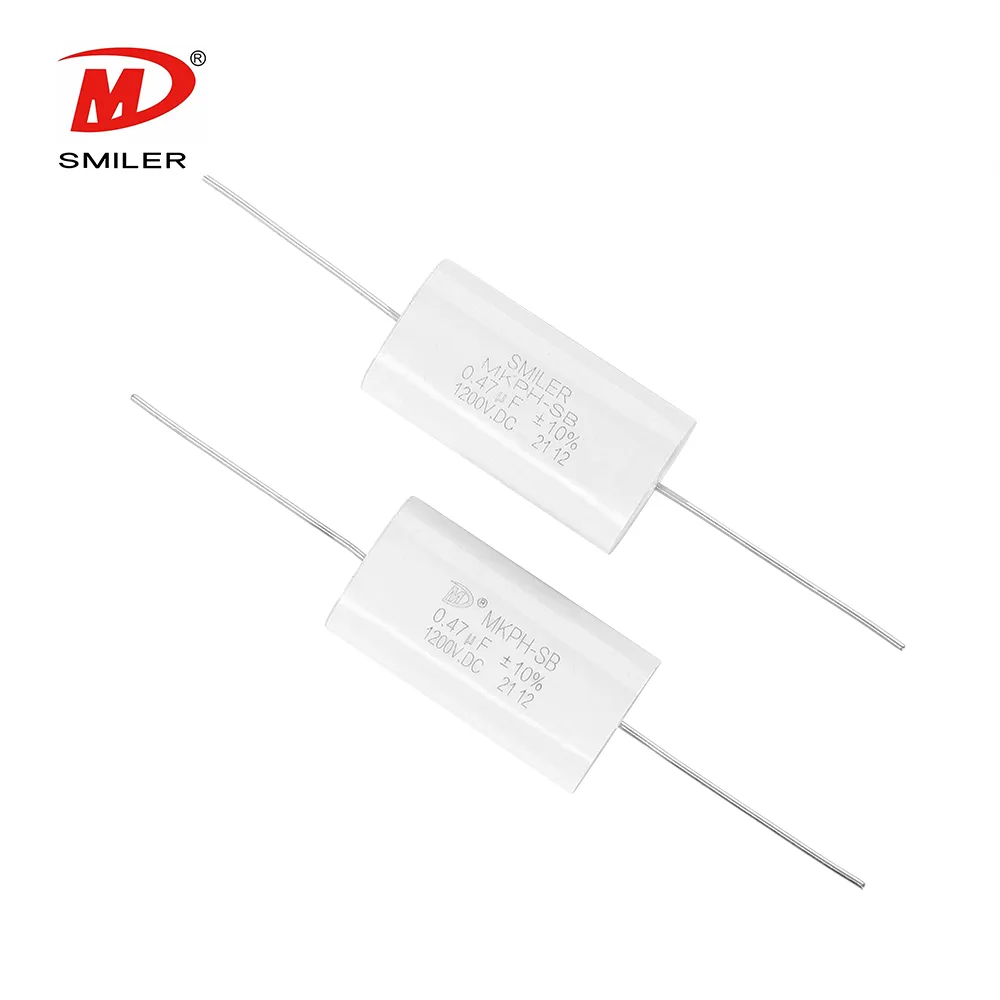
The documented structure includes metallized polypropylene film, a plastic shell or Mylar tape housing, and resin filling. The source also identifies tinned copper leads. These details distinguish the package discussion from that of a terminal-type snubber family, but they do not define one universal outline for all MKPH-LS parts.
Provide the mounting envelope, lead interface, and nearby assembly constraints. Ask the supplier to state which housing and lead arrangement is proposed and to supply the corresponding dimensional information. For a replacement, identify the dimensions that must remain fixed and those that can be reviewed. Do not assume the tape and plastic versions can be exchanged without a mechanical check. The approved configuration should remain identifiable from the sample stage through the production purchase order and receiving inspection.
Voltage selection needs the actual operating waveform
The published family range is 700 to 3000 VDC. This DC range helps identify the series for a sourcing discussion, but it is not an unrestricted AC rating and does not resolve the voltage conditions of a resonant or pulse application. Supply the waveform and intended circuit role so the relevant limits can be reviewed for the candidate part.
State the target capacitance and tolerance separately and request confirmation of the individual configuration. This page does not supply a universal capacitance range. Avoid combining a voltage from one catalog entry with dimensions or current data from another and treating the result as an available product. The proposed specification should hold together as one identified capacitor, with the electrical rating, lead arrangement, and body dimensions all belonging to the same configuration.

Distinguish pulse stress from repeated operating duty
The MKPH-LS description refers to low self-inductance, low equivalent series resistance, and the ability to withstand current impact. These are qualitative features rather than a universal numerical current rating. To assess a proposed part, the technical discussion needs the pulse shape, repetition conditions, operating frequency, and thermal environment relevant to the application.
Where measurements are available, provide waveform captures with clear units and the measurement location. Identify whether they represent startup, normal operation, a transition, or another defined state. Ask for applicable current and voltage-transition limits for the selected configuration. Do not substitute a calculated or assumed value for missing product data. A purchasing comparison is more reliable when each candidate is assessed against the same duty and the same stated conditions, rather than against isolated figures taken from different test contexts.
Resolve the thermal envelope before approval
Temperature suitability should be confirmed for the exact MKPH-LS configuration and operating duty. This page does not make an unrestricted 105 degree Celsius operating claim. Send the local ambient conditions, relevant case measurements, and any hotspot estimate, keeping those terms distinct. Ask the technical team to identify the applicable operating and derating limits in the proposed specification.
The source gives an operating-life statement of 100000 hours at rated voltage and 70 degrees Celsius. Preserve those conditions when discussing the figure. It is not a warranty duration or a forecast for a resonant circuit at an unspecified temperature. If lifetime is part of the purchasing decision, identify the intended duty and request the information needed for the equipment team's assessment. A maximum-temperature question and a service-life question need separate answers, even when they concern the same capacitor.
Evaluate resonant and surge applications against defined criteria
A meaningful sample request includes the question the trial must answer. For a resonant circuit, state the intended operating range and the observations your engineering team requires. For a surge absorption application, identify the relevant switching conditions and the acceptance criteria used for the assembly. These are evaluation suggestions, not claims of a completed qualification or a promised performance outcome.
Keep the sample configuration, circuit revision, connection geometry, and test conditions in one record. If the prototype is later rearranged, review whether the original evidence still represents the final installation. When replacing an existing part, compare against the approved requirement rather than only the value printed on the old body. The outcome should be a controlled decision about an identified capacitor in an identified application, with any remaining technical questions recorded before production purchasing begins.
Have a drawing or target specification?
Include it in your first message so the conversation starts with your equipment requirements.
Start a technical inquiryPrepare an inquiry for the exact pulse or resonant duty
For MKPH-LS, state the intended circuit role at the start of the inquiry. Give the required capacitance, tolerance, voltage waveform, frequency or repetition conditions, and relevant current information. Explain which figures come from measurements and which are design targets. If a resonant requirement and a surge absorption requirement are being considered separately, describe them as separate cases rather than merging their limiting values into one unexplained list.
Provide the housing preference, lead interface, and available mounting envelope. Mark dimensions that must remain compatible with an existing assembly and those that can change. Request the proposed drawing and electrical information as one configuration-specific response. A family voltage range and a photograph do not define the capacitance, lead dimensions, or operating limits needed for a purchase decision.
Add sample quantities, expected production demand, delivery destination, and required approval documentation. Ask for current minimum quantity, sample and production timing, and packaging terms against the actual proposal. No fixed commercial terms are established here. Keep the configuration identification consistent between the technical response and quotation, so the selected package and electrical requirement remain attached to the offer being compared.
Read the current table with its frequency and temperature labels
The MKPH-LS technical table distinguishes voltage-transition rate, peak current, RMS current, and equivalent series resistance. The RMS-current heading specifies 60 degrees Celsius and 10 kHz, while the resistance heading specifies 100 kHz. These conditions are part of the data. A comparison that removes the frequency labels would make unlike quantities appear directly interchangeable.
For a resonant application, describe the waveform and frequency at the intended capacitor position. For surge absorption, include the relevant transition and repetition information. Those inputs help identify which published property is relevant to the selection question. A brief pulse requirement and a repeating thermal duty should not be collapsed into one unspecified current value, even if both are expressed in amperes.
These distinctions are useful without assigning a numerical current limit to the whole MKPH-LS family. The applicable limits must belong to the proposed capacitance, voltage, and package. Do not estimate an unconfirmed rating from a neighboring table row or infer a guaranteed value from the phrase low ESR. The engineering comparison should retain the stated conditions and use a coherent set of data for the candidate under consideration.
Capacitance tolerance matters differently in the two listed roles
MKPH-LS lists J and K capacitance tolerances, corresponding to plus or minus 5 percent and plus or minus 10 percent. The appropriate choice depends on the circuit requirement. For a resonant application, the designer should identify the acceptable capacitance window across the intended operating conditions. For a surge absorption position, the acceptable value should be established from the switching requirement rather than selected solely because a tighter tolerance is available.
The housing choice and tolerance choice answer different questions. A plastic shell or Mylar tape housing describes the physical package, while the tolerance describes the permitted capacitance variation around the specified value. Neither should be used as a shorthand for the other. A more convenient package does not establish that its capacitance tolerance meets the circuit, and a tighter tolerance does not establish that its leads fit the assembly.
Use those separate questions to compare proposed versions: does the electrical value satisfy the intended role, and does the documented package suit the connection? This provides a focused selection framework without asserting an unverified improvement in resonance stability, surge suppression, or service life for a particular version. The result should be a reasoned choice tied to the actual circuit need.
Frequently asked questions
What distinguishes the MKPH-LS application list?
The product page identifies IGBT surge absorption and high-frequency resonant circuits. Explain which role applies to your equipment and send the relevant waveform and thermal conditions. The application list does not qualify every configuration for every circuit in those categories.
Which package options are documented?
The source lists a plastic shell or Mylar tape housing with resin filling and tinned copper leads. Request the drawing of the proposed version and confirm the mechanical interface. Different housing options should not be assumed to be directly interchangeable.
Is a universal capacitance range shown here?
No. Send the required capacitance, tolerance, voltage, and operating duty for confirmation against an individual proposal. This avoids treating a family description as a complete availability table or combining specifications that belong to different configurations.
Does this page promise operation at 105 degrees Celsius?
No. Obtain the applicable thermal envelope and derating information for the selected part before approval. Identify ambient, case, and hotspot information separately in the inquiry so the technical team can review the actual installation conditions.
Can I select it from the DC voltage alone?
No. Pulse and resonant applications require the actual waveform, repetition or frequency conditions, capacitance requirement, and thermal environment to be considered. Request the part-specific data that address those requirements alongside the housing and lead drawing.
Sources & technical reading
External references explain general engineering principles. They do not establish SMILER product ratings or approvals.
