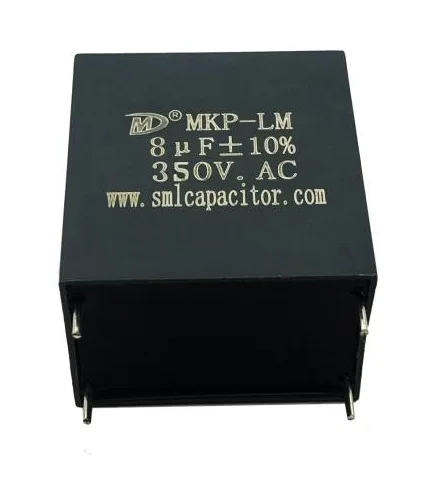
An output filter inquiry needs circuit context
The catalogue positions MKP-AM for output AC filtering in power converters, UPS systems and motor drives. State the intended circuit position when you contact the manufacturer. A capacitor used in an output filter should be evaluated against the conditions at that position, not selected from the equipment's headline power rating alone. Include the relevant circuit drawing and identify the function the proposed capacitor must perform.
If you are replacing a component in an existing design, attach the current specification and explain the reason for the change. A board space constraint, a new electrical requirement and a supply-chain substitution lead to different review questions. For a new design, separate calculated targets from measured prototype values. That gives the reviewing engineer a clear picture of which conditions are established and where further evaluation is needed before the part becomes an approved item.
Published construction and connection options
MKP-AM uses metallized polypropylene film in a plastic shell with resin filling. The product overview identifies two-pin and four-pin lead options. These descriptions help frame a board-level sourcing discussion, but the exact footprint must come from the drawing for the selected configuration. Do not infer pin pitch, lead diameter or body height from a family image or from another capacitor with the same nominal capacitance.
Supply the permitted body envelope and connection layout with your request. If the printed circuit board is already released, identify which dimensions are fixed and which could be revised. Ask for the proposed outline before committing to a footprint. During sample review, compare the physical part and drawing with the actual board assembly. The installation should be reviewed as a complete arrangement, including adjacent components and the space required for production assembly.
Use the series range without assuming every combination
The published overview gives 250–400 VAC and 0.1–40 µF as MKP-AM series ranges. The detailed voltage options are 250, 310, 350 and 400 VAC at 85°C. These values should not be read as a promise that every capacitance, enclosure and lead combination is available at every rating. Request confirmation of the particular combination your design requires and identify it consistently in the sample and quotation documents.
The source lists capacitance tolerance options of ±5% and ±10%. State the required option in the purchasing specification. Where your filter design depends on an allowed variation, have the equipment engineer establish that requirement rather than choosing a tolerance only because it appears in a catalogue. If alternatives are acceptable, show the acceptable range and ask for proposed deviations to be explicit. That makes a technical comparison possible before the commercial decision is made.

Describe waveform and current requirements together
A useful filter capacitor brief includes more than a voltage number. Provide the expected waveform, frequency content and current requirement at the component, with the operating modes that produce those conditions. Where you have measurements, identify the equipment configuration and measurement conditions. Where values are design estimates, label them as estimates. The purpose is to give the component review a defined application rather than an incomplete list of isolated targets.
The catalogue includes electrical characteristics tied to individual configurations and stated conditions. Use the relevant data for the proposed part instead of taking the most favorable entry from a different row. Ask for clarification when a table heading or condition is unclear. Avoid converting a pulse or peak value into a continuous current claim. Your engineering team should decide what data is needed for the filter assessment and whether the proposed configuration satisfies the application.
Keep temperature and derating attached to the rating
The published specification permits operation up to a stated case temperature of 105°C, with voltage derating between 85°C and 105°C at 1.5% per degree relative to the rated voltage at 85°C. The high-temperature figure must therefore stay connected to its derating condition. It should not be presented as full rated voltage at every temperature. Request the applicable rating information for the proposed part and review it against the actual installation.
Describe the thermal environment around the capacitor, including any measured case temperature and the conditions under which it was recorded. Do not substitute enclosure ambient temperature for every component temperature without engineering review. If the available information is incomplete, make thermal assessment part of the prototype plan. Keep the measured condition, allowable limit and engineering conclusion distinct in the approval record so later reviewers can understand the basis of the selection.
Read life and standards statements carefully
The MKP-AM source states an operating life of 60,000 hours at rated voltage and 85°C. That is a conditional catalogue statement. It is not a warranty period, an equipment lifetime promise or a guarantee under arbitrary waveforms and temperatures. Preserve the stated conditions when discussing the product and ask for any additional information needed for your project's reliability assessment.
The page also references standards and compliance statements. Ask which evidence applies to the exact configuration under consideration and what the scope of that evidence is. A compliance statement should not be converted into an unverified third-party listing. Likewise, the resin's flammability description is a material statement, not approval of the entire converter. Bring your market and customer requirements into the discussion early so the documentary review can proceed alongside the electrical and mechanical work.
Have a drawing or target specification?
Include it in your first message so the conversation starts with your equipment requirements.
Start a technical inquiryOrganize prototype evaluation around open design questions
Before requesting samples, identify what remains to be demonstrated. A prototype review may need to address footprint fit, the selected electrical characteristics and operation in the complete filter circuit. Have your engineering team define the conditions, measurements and acceptance criteria. These are suggested qualification steps, not an assertion that a particular test package has already been performed on the part you will receive.
Keep the sample reference connected to the drawing and proposed specification. During evaluation, record the operating mode and equipment configuration alongside the results. If the circuit or cooling arrangement changes during development, note which results belong to which revision. An acceptable result from an earlier prototype should not silently become approval for a later design with different conditions. Close each open question with evidence or leave it visibly unresolved before the production release decision.
Prepare an RFQ your technical buyer can compare
Provide the capacitance, tolerance, rated voltage requirement, connection arrangement and maximum body envelope. Attach the relevant waveform and thermal information, then add the expected order quantity and delivery destination. Ask for sample arrangements and commercial terms against the proposed configuration. Minimum order quantity, availability and delivery period require confirmation; they cannot be inferred from the breadth of the published series range.
If several board versions are involved, list them separately and identify any common component proposal. State whether a different footprint or rating can be considered. Ask for deviations to be called out in the quotation so engineering can review them before procurement treats two offers as equivalent. Include required marking and documentation details. A quotation is easier to approve when its technical basis is visible and the remaining application questions have an assigned next step.
Compare filter alternatives at the same operating point
A useful comparison between candidate MKP-AM configurations starts with the same circuit conditions. Keep the required capacitance, voltage waveform and temperature assumption visible beside each proposal. If one candidate changes the footprint, show that separately rather than letting a smaller body become the deciding factor before the electrical review. Ask whether the stated electrical characteristics apply at the frequency and temperature relevant to your assessment.
The published technical tables distinguish current, loss-related information and pulse-related data by configuration and stated conditions. These fields answer different questions; the largest number in a row is not a general performance score. Have the filter designer identify which limits govern the application, then request clarification for the selected part where necessary. If a design change alters the output waveform or the cooling arrangement, compare the new conditions with the basis used for selection. This is more informative than repeating an earlier approval merely because nominal capacitance is unchanged. Send the filter position and operating-point information with your inquiry so the manufacturer can address a concrete component requirement.
Frequently asked questions
What is MKP-AM intended for?
The catalogue identifies output AC filtering for power converters, UPS equipment and motor drives. Submit the circuit position and operating conditions for your application. A general application category does not establish that every series variant is suitable for every output filter.
What ranges are published?
The overview lists 250–400 VAC and 0.1–40 µF. These are series ranges, not a promise of every possible combination. Confirm the selected capacitance, voltage, tolerance, outline and connection arrangement together before requesting an approval sample.
Can full rated voltage be used at 105°C?
Do not infer that from the maximum temperature. The published specification states voltage derating between 85°C and 105°C. Have the application engineer review the proposed rating against the actual temperature and operating conditions, using the selected part's confirmed information.
Does the life statement represent a warranty?
No. The source states 60,000 hours at rated voltage and 85°C. That conditional figure should not be converted into a warranty or a guaranteed lifetime for your complete system. Request the information needed for your own reliability assessment.
What should accompany a PCB capacitor quotation request?
Send the required capacitance and tolerance, electrical operating conditions, temperature information, footprint and maximum dimensions. Add quantity, destination and documentary requirements. Ask for the proposed configuration and commercial terms to be confirmed together so the offer is technically reviewable.
How should I compare candidate parts with different footprints?
Keep the electrical evaluation and board impact visible in the comparison. Record the proposed body envelope, lead arrangement and required layout changes for each candidate, then ask engineering to assess each complete configuration. Do not transfer an electrical result from one candidate to another solely because their nominal capacitance matches. The final approval should identify the part, board revision and operating conditions that were actually reviewed.
Sources & technical reading
External references explain general engineering principles. They do not establish SMILER product ratings or approvals.
