A fan capacitor inquiry starts with the motor
A fan product name rarely describes the complete electrical requirement. One enclosure may be offered with different motors, controls or destination market configurations. Start your CBB61 inquiry by identifying the motor and the capacitor's function in that particular circuit. The published application list gives a relevant starting point for fans, ventilators and air purifiers, but it does not approve every equipment design within those categories.
For a new platform, attach the motor supplier's requirement and the relevant section of the circuit drawing. For an existing product, identify the component currently used and the reason for the sourcing change. Price comparison, a different mounting space and a revised motor are different tasks. Giving that context helps the buyer and engineer agree on what must be preserved and what may be reconsidered before a sample is requested.
Understand the CBB61 construction
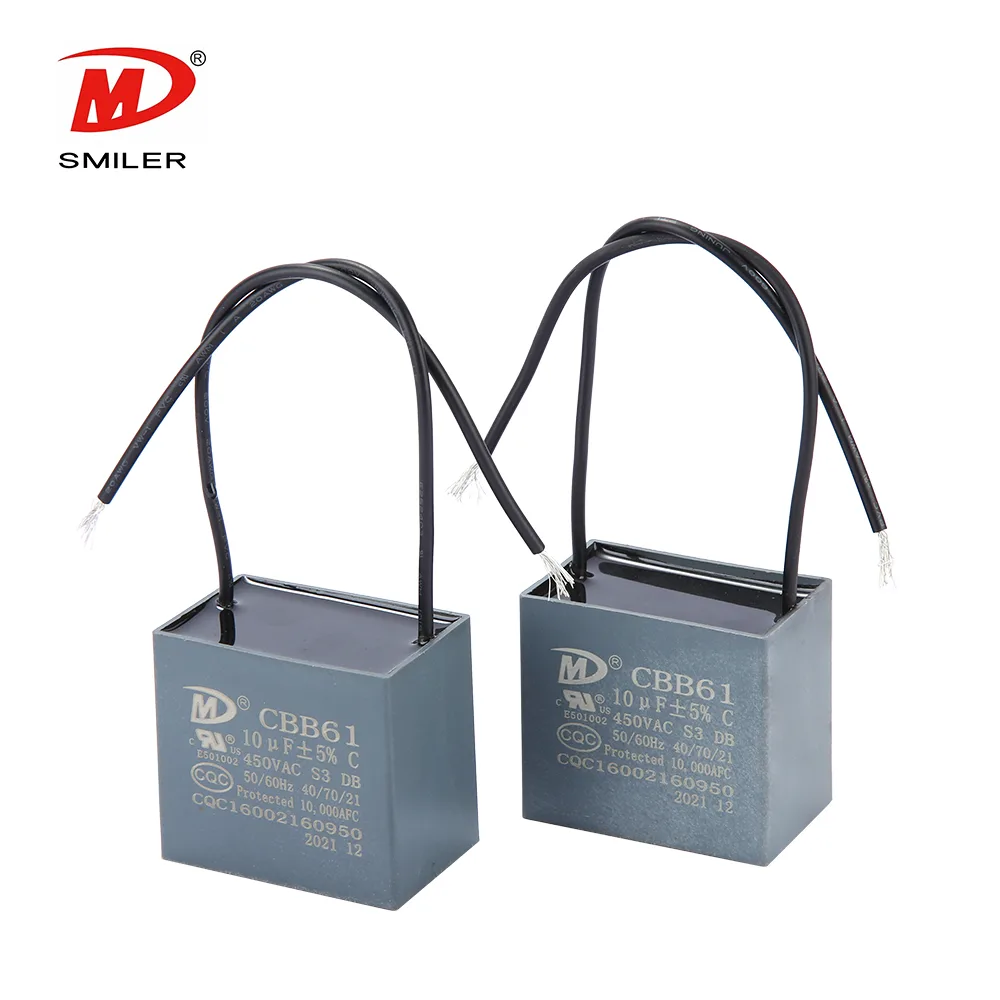
The catalogue describes CBB61 as a wound metallized polypropylene film capacitor in a plastic shell with resin filling. Self-healing behavior and low loss are listed as series features. Use those descriptions to understand the product family, then request the specific information needed for your chosen part. They do not provide a measured result for your fan assembly or establish a service life under every operating condition.
If your equipment has a material requirement, place it in the specification rather than relying on a general product description. Ask for the enclosure drawing and any relevant supporting material information for the proposed configuration. The resin's published flammability description relates to material, not blanket certification of the finished capacitor or fan. Keep these distinctions clear when transferring information into your own technical file or sales catalogue, where a broad claim can easily lose its original scope.
Specify electrical requirements without losing the units
The published CBB61 voltage range is 110–600 VAC at 50/60 Hz, with capacitance tolerance options of ±5% and ±10%. These are family details. Your order should identify one selected rated voltage and capacitance combination, with the tolerance written beside it. Avoid descriptions that contain only a model name and a quantity, because they leave the actual purchasing requirement unresolved.
Supply the intended operating conditions as well as the nominal equipment voltage. Where your product has several speed or control settings, ask the equipment engineer which conditions should be represented in the evaluation. Keep measured values separate from proposed limits. If the inquiry includes multiple capacitor values, assign distinct internal references and avoid combining them into one ambiguous line. The reference on the quotation, drawing, sample request and eventual purchase order should lead to the same electrical definition.

Make enclosure fit a measurable requirement
Small appliance assemblies can leave little freedom for a change in component shape. Supply an outline that shows the permitted body envelope and the space needed for connections. Identify the mounting arrangement and any neighboring parts that limit access. An overall measurement taken from a photograph is not an approval drawing; use actual dimensions and make clear which dimensions are maximum limits.
When samples arrive, check fit in the intended assembly rather than on an empty bench alone. Review whether the connections can be made consistently and whether routing is practical for production. Record any requested changes before approving the final outline. Use the confirmed outline for the selected electrical configuration when preparing the bill of materials. Ask the assembly team to identify any access constraint before the enclosure drawing is released, while a change can still be evaluated alongside the motor layout.
Separate fan platform variants cleanly
A purchasing team may manage several fan or air purifier models that look similar from the outside. Build a simple variant matrix that connects each equipment model to its motor, capacitor requirement and drawing revision. Mark shared components only after engineering has established that they are genuinely interchangeable. Sharing the CBB61 family name does not, on its own, justify consolidating several purchasing references.
This approach also makes a supplier discussion more useful. If the enclosure is common but the capacitance differs, say so. If the electrical requirement is unchanged but the connection arrangement varies, show the variation. Ask which configurations can be quoted against the submitted drawings. Keep any proposed consolidation separate from the current approved design until it has been evaluated. Otherwise a cost saving exercise can quietly introduce a different component into an equipment version that was never included in the sample review.
Qualify samples against the intended operating pattern
Before ordering samples, decide what the evaluation is meant to establish. The plan might include identity checks, dimensional inspection and electrical measurements, followed by trials in the actual equipment. Your engineering team should select the conditions and acceptance limits appropriate to the fan or ventilator. This is a recommended buyer workflow, not a statement that all of these checks are included in a standard factory package.
Record the equipment configuration used in the trial, including the motor and control arrangement. Keep observations separate from conclusions: a dimensional mismatch, a measured electrical deviation and an equipment behavior concern require different follow-up. If the sample is accepted after a design change, attach the change to the approval record. Retain enough information for another engineer or purchasing colleague to understand why the part was accepted without having to repeat the original discussion from memory.
Have a drawing or target specification?
Include it in your first message so the conversation starts with your equipment requirements.
Start a technical inquiryRequest the right documents for your market
Tell SMILER which documentary requirements apply to your project before the sample stage. Ask for evidence tied to the proposed part, including its identification and rating scope. Do not transfer an approval claim from another CBB series to CBB61. A family resemblance, shared manufacturer or similar application does not establish that the same certificate covers the component you intend to purchase.
The catalogue lists different life and safety class options for CBB products. Request the option and conditions that apply to the quoted configuration rather than assigning the most favorable family value to every order. Your finished equipment may have its own compliance process; make the capacitor documentation part of that review. If something is still awaiting confirmation, leave it as an open requirement in the project file instead of presenting it as completed evidence to your customer.
Build a clear fan capacitor RFQ
Include a technical reference, expected quantity and delivery destination in your quotation request. Add your target schedule, sample quantity requirement and any packaging or marking needs. These are purchasing inputs, not promises of availability. Ask the manufacturer to confirm minimum order quantity, lead time and any costs connected with a requested configuration. A complete request makes different offers easier to compare on an equal basis.
Where a drawing permits alternatives, identify the allowed range explicitly. If there is no flexibility, mark the critical dimensions as fixed. Require proposed deviations to be shown with the quotation so they can receive engineering review before price approval. For a distributor sourcing several fan capacitor variants, use separate order lines and keep the downstream description aligned with the approved specification. A precise component description is more useful than a long list of unverified compatibility claims.
Ask different questions for fans and air purifiers
For a fan project, identify which motor and control arrangement belongs to the proposed capacitor. If the fan has selectable operating settings, ask the designer whether the same capacitor requirement applies throughout those settings and which condition should lead the sample evaluation. Do not derive that answer from the number of buttons on the enclosure. A control description and the relevant circuit information are more useful than a commercial fan category.
For a ventilator, show the intended mounting position and the route available for connections within the assembly. For an air purifier, identify whether the inquiry concerns the fan motor and separate that requirement from the rest of the appliance electronics. Where one enclosure accepts several motor variants, ask whether the capacitor interface remains common and where the electrical specifications diverge. Those questions help identify which variants can be compared together and which need separate proposals. They do not imply that SMILER has already evaluated any particular control method or appliance model. Include the motor reference and variant list in your CBB61 inquiry.
Frequently asked questions
Which equipment is CBB61 listed for?
The product page lists fans, ventilators and air purifiers, together with starting and running of AC motors. These application categories do not establish compatibility with every motor or control arrangement. Submit the equipment requirements for a part-specific review before approval.
What is the published housing construction?
CBB61 is described with metallized polypropylene film, a plastic shell and resin filling. Ask for the outline of the proposed variant so your team can check the body envelope and connection space in the actual equipment assembly.
Does the series range define my order?
No. The published 110–600 VAC range describes the family. Your order needs a selected rated voltage, capacitance, tolerance and mechanical configuration. Keep the exact combination consistent across the quote, sample request, approved drawing and purchasing reference.
Can one capacitor cover several fan models?
Possibly, but only after your engineering review establishes a common requirement. Provide a matrix linking the equipment models to their motor and capacitor specifications. Do not assume interchangeability because the enclosures look alike or the components share a CBB61 label.
What should I ask about approvals and lead time?
Request approval evidence for the proposed variant and ask for current commercial terms against your quantity and destination. This page does not promise a universal certification scope, minimum order quantity or delivery period. Record those confirmations in the quotation package.
How can a distributor organize several CBB61 variants?
Create a component list that links each stock reference to an approved electrical combination and drawing. Keep customer-facing descriptions within that confirmed scope. If several fan models are listed as compatible, retain the engineering basis for that mapping. Where compatibility has not been assessed, describe the component by its verified specification and request an equipment check rather than expanding a general application list into a replacement guarantee.
Sources & technical reading
External references explain general engineering principles. They do not establish SMILER product ratings or approvals.